

In Bojonggede Village, Bogor Regency, West Java, change was not born from magnificent buildings. It grew from care. From the simple kitchen in the home of Ms. Nurkhikmah—affectionately known as Ms. Nung—a long journey began.
From Posyandu to Classroom (2012–2014)
In 2012, Ms. Nung was selected as a cadre member for a supplementary feeding program initiated and guided by the Yayasan Balita Sehat Indonesia (Indonesian Healthy Toddler Foundation) in collaboration with the Bojonggede Health Center (Puskesmas). Her home became the hub of activity. There, children with malnutrition learned to eat meals with meticulously calculated calories and nutritional content.
“I only found out then that there is a science to feeding children,” she recalled.

From that experience, the idea was born to establish an Early Childhood Education center (PAUD) integrated with nutritional monitoring. In 2014, PAUD Sehat Ceria was established, integrated with the Mawar Posyandu (Integrated Health Post) in RW 10, Bojonggede. The first teachers were the cadres who had previously been involved in the nutrition program.
At its opening, nearly 60 children registered. However, the team prioritized children with malnutrition and those at risk of stunting. In the first year, around 45 children studied in three classrooms. For Ms. Nung, they all deserved to grow up healthy and confident.
Seeing her dedication, the leadership of Yayasan Balita Sehat Indonesia supported Ms. Nung’s education up to a bachelor’s degree in early childhood education. Financial support from the foundation’s chairperson became a crucial part of her journey. For the foundation, care is not only for the children but also for the teachers and cadres as the frontline workers in the field.
PAUD as a Second Home
Now, in 2026, PAUD Sehat Ceria still stands and continues to serve children in Bojonggede Village and its surroundings. Healthy menus are still applied, and nutritional education continues to be shared with parents and other posyandu cadres. To this day, more than 300 children have completed their early childhood education at PAUD Sehat Ceria.
“This school is like a second home. If I don’t see them, I miss them,” said Ms. Nung. Her love for children is deeply ingrained.
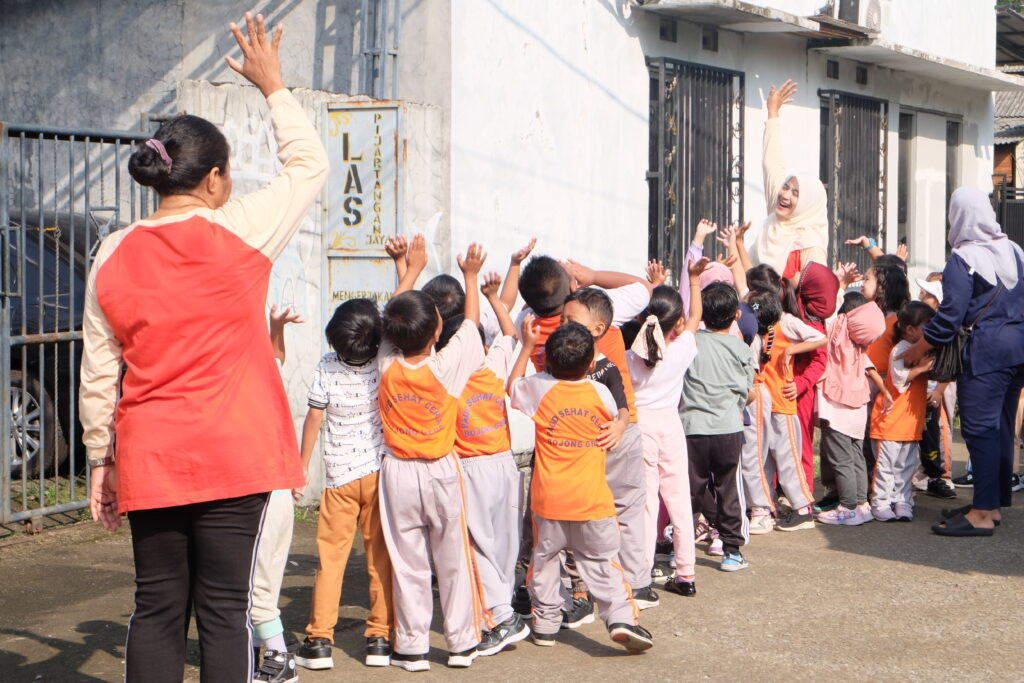
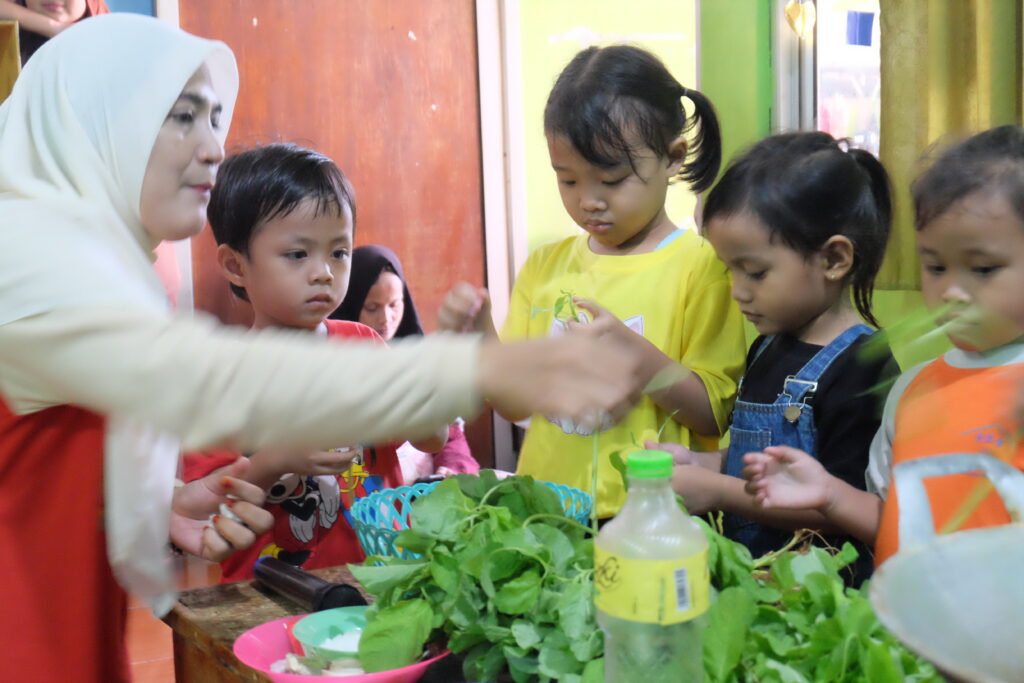
She has seen real change: parents who once felt that toddlers did not need school now understand the importance of early education—not just for learning to read and count, but for character formation.
Ms. Nung has a simple principle: education must work hand-in-hand with parents. Character is formed through habits, both at home and at school.
Maintaining Values, Nurturing Hope

PAUD Sehat Ceria was once a model PAUD in the Bojonggede District, featuring parenting programs, health checks, nutritional monitoring, and eco-friendly habits. Challenges always exist, especially in maintaining the sustainability of these good practices.
For Ms. Nung, maintaining the PAUD means maintaining the original values that gave birth to it: care, health, and holistic education.
From a posyandu cadre to a principal, her journey is a calling of the heart. She endures not because of the position, but because of her love for the children, the village, and the small changes that make a big impact.
Her message to young teachers in the village is: “Keep working with sincerity and patience.”
For the 25th anniversary of Yayasan Balita Sehat Indonesia, she has only one hope: “May the Yayasan Balita Sehatcontinue to lead the way.”
For her, Yayasan Balita Sehat Indonesia has been an essential support system in her life, carrying her mission to this day. From a home kitchen in 2012 to a classroom filled with laughter today, Ms. Nung’s journey is proof that change in a village can start from one thing: care nurtured in children and educators ensures that change will grow stronger and last longer.


