
JAKARTA, 1 September 2026 – Maternal mental health is an integral part of maternal and child health. A mother’s psychological wellbeing during pregnancy and after childbirth affects not only her own wellbeing, but also her child’s health and development, as well as the quality of care the child receives.
To strengthen attention to this issue, FMCH Indonesia held a workshop at the Grand Kemang Hotel in Jakarta to share findings from the pilot of the BUNDA Program (Bersama Mendukung Ibu Sehat dan Bahagia—Supporting Mothers to be Healthy and Happy).
The workshop provided a discussion to share good practices and lessons learned from the implementation of the BUNDA Program pilot in Southwest Sumba and South Central Timor Regencies, East Nusa Tenggara. Beyond sharing the pilot findings, the forum explored the program’s effectiveness, challenges encountered during implementation, and opportunities for its future development.
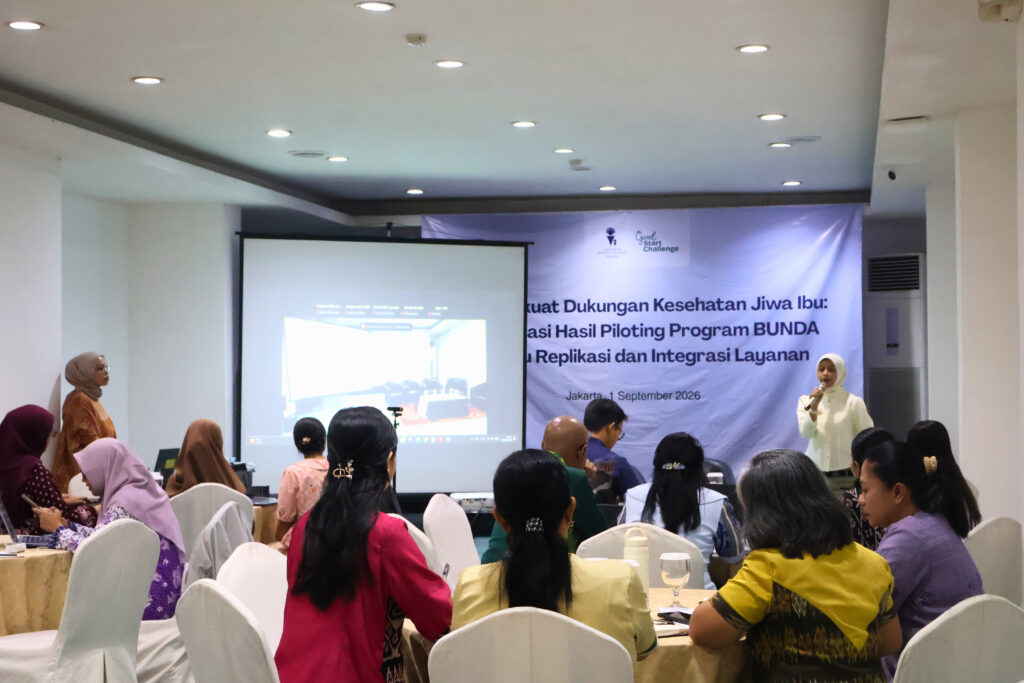
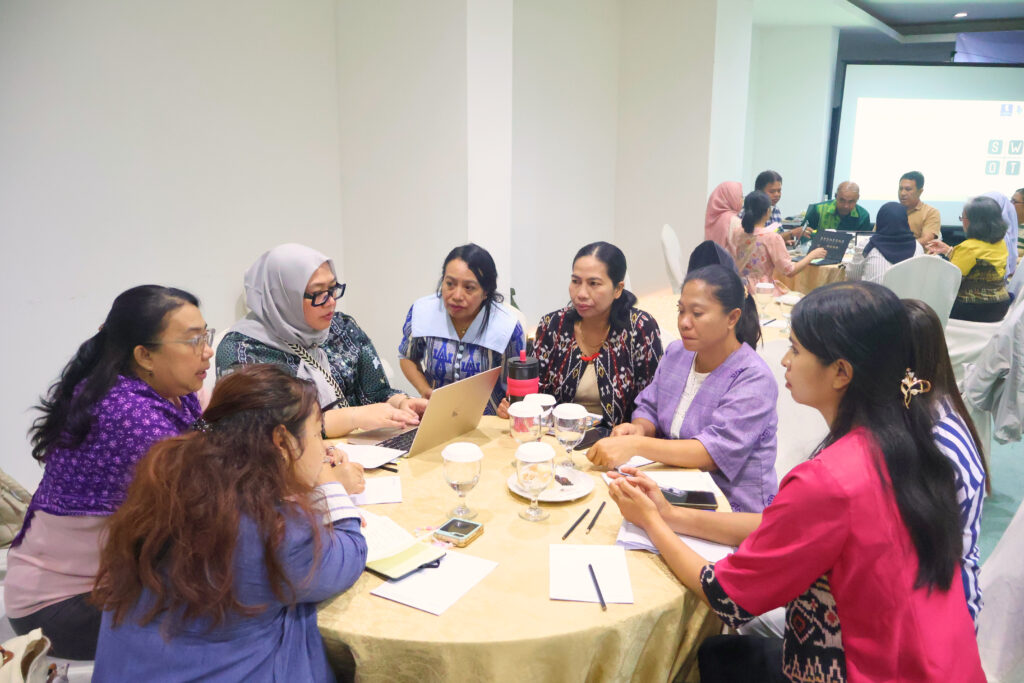
By bringing together representatives from government, academia, professional associations, and development partners, the workshop gathered diverse perspectives and recommendations to help refine the BUNDA Program model. It also marked an initial step towards building a shared commitment to replicating the program and integrating maternal mental health support into existing maternal and child health services. In addition, the workshop aimed to strengthen cross-sector collaboration to ensure that support for mothers can be sustained over time.
Mental Health as an Integral Part of Maternal Health
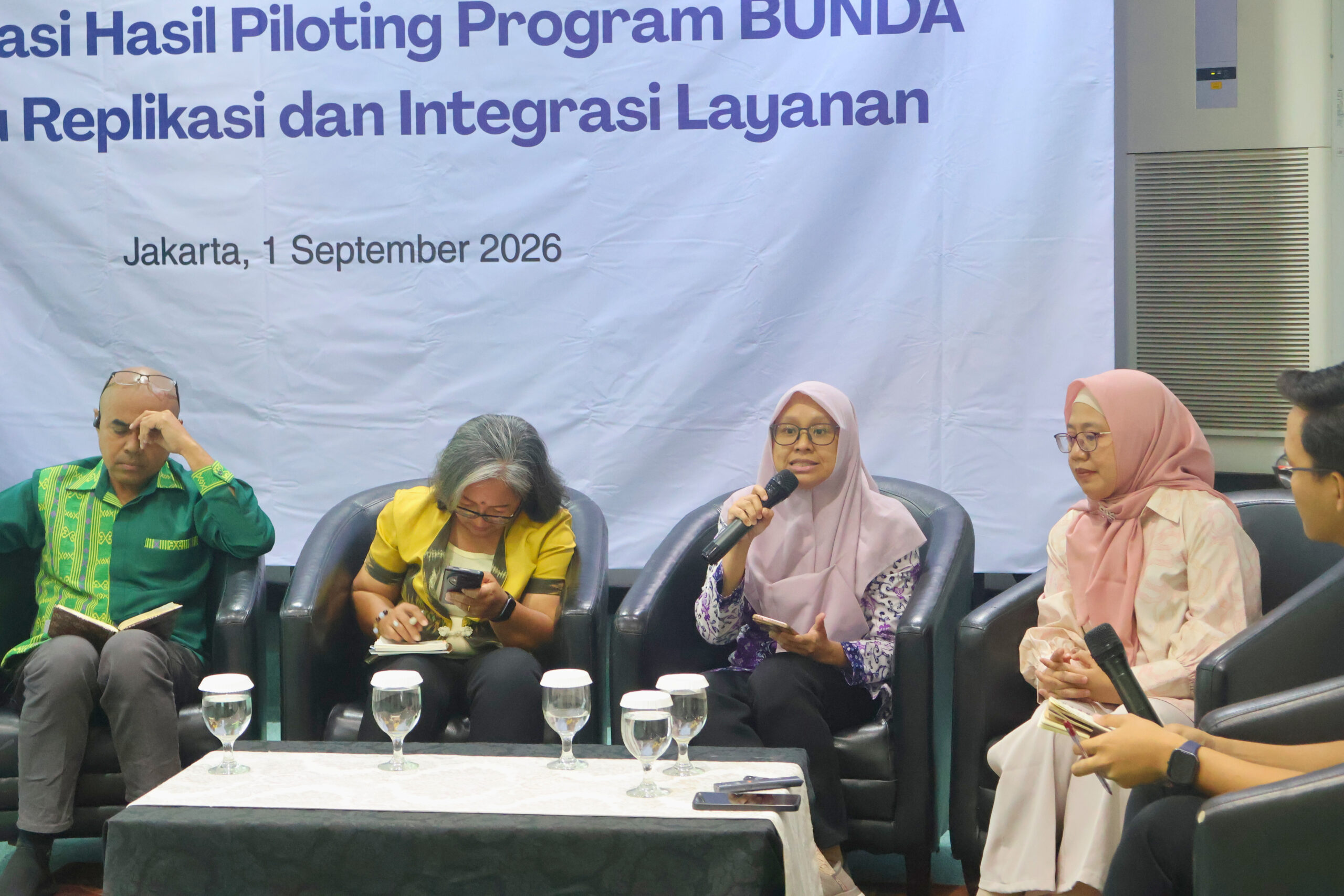
From left to right: Niczon Henry Ataupah (Head of Public Health at the Health Office of TTS); I Gusti Ayu Putri Astuti (Head of Public Health Division of Health Office of SBD), Doctor Hany (Directorate of Family Health, Ministry of Health), Doctor Yunita (Directorate of Health Services for Vulnerable Groups, Ministry of Health)
Within Indonesia’s national health policy, the principle of “No Health Without Mental Health” recognises mental health as an integral part of healthcare. This approach encompasses health promotion and prevention, as well as treatment and rehabilitation for those requiring further care.
Doctor Yunita from the Directorate of Health Services for Vulnerable Groups at the Ministry of Health explained that mental health is now part of comprehensive healthcare, covering promotive, preventive, curative, and rehabilitative measures. This commitment is also reflected in the expansion of early mental health screening. Throughout 2025, 251,204 mothers received mental health screenings. The government also provides mental health support through healing119.id, which has served 220,772 clients.
Within maternal healthcare, mental health has been integrated into the services women receive from pregnancy onwards. Doctor Hany from the Ministry of Health’s Directorate of Family Health explained that maternal mental health screening is now included in Indonesia’s integrated antenatal care standards through the 12T Standard. This means that mental health is no longer addressed separately from pregnancy care. Instead, it has become part of routine antenatal services alongside other examinations designed to identify health risks affecting mothers and their babies.
The BUNDA Program: Bringing Support Closer to Mothers
One of the challenges in making mental health services accessible to mothers is ensuring that support reaches communities at the village level, particularly in areas where geographical conditions and limited access to services create additional barriers.
FMCH Indonesia developed the BUNDA Program as a community-based psychosocial support model that strengthens the capacity of midwives and community health volunteers, who interact directly with mothers and families in their daily work. The program was piloted from January to June 2026 in Southwest Sumba and South Central Timor Regencies, East Nusa Tenggara.
During this period, 435 pregnant and postpartum mothers received support. The pilot findings indicated an approximately 10% reduction in the number of participants showing early symptoms of stress and depression.
In addition to supporting improvements in mothers’ wellbeing, the BUNDA Programme focused on equipping midwives and community health volunteers to identify mental health risks at an earlier stage, provide basic psychosocial support, and connect mothers with the services they need.
Voices from the Front Line: Building Trust
Experiences from the implementation of the BUNDA Programme demonstrated that the close relationships midwives and community health volunteers have with local communities are among the main strengths of a community-based approach.
In addition to incorporating simple counselling sessions into existing Posyandu activities—Indonesia’s community-based integrated health services—midwives and community health volunteers conducted personal outreach and home visits. These approaches helped create a more comfortable environment in which mothers could talk about their experiences, concerns, and everyday challenges.
Sriniah, a midwife from South Central Timor Regency, shared that home visits encouraged mothers to speak more openly about the burdens they faced within their families. Mama Erni, a community health volunteer from Batu Putih Subdistrict in South Central Timor, described a similar experience. The trust built throughout the support process led some mothers to refer to their community health volunteers as their “besties”—trusted friends with whom they could share their stories.
This approach also created opportunities for greater family involvement. In several programme areas, husbands began to become more involved in supporting mothers, including accompanying their wives to Posyandu. These experiences show that maternal mental health support is not only about the individual mother, but also about the family and community environment surrounding her.
Turning Challenges into Shared Learning
The BUNDA Programme pilot also encountered various challenges. Geographical conditions, weather, limited access to communication technology, long distances between communities, the workload of health workers, and social issues such as teenage pregnancy were all part of the realities faced during implementation.
Niczon Henry Ataupah, Head of Public Health at the South Central Timor Health Office, highlighted the complexity of maternal health challenges in the region. As of July 2026, for example, seven maternal deaths had been recorded, involving a range of medical conditions and contributing factors.
Workshop discussions also highlighted the importance of supporting the mental health and wellbeing of frontline health workers and community health volunteers. They are not only responsible for delivering services but also face significant emotional and operational pressures while supporting communities experiencing complex challenges.
These experiences provide an important lesson: efforts to develop maternal mental health support must take into account the conditions and capacity of local health systems, including the needs of the health workers and community health volunteers responsible for delivering these services.
Strengthening Collaboration for Maternal Mental Health Support
The BUNDA Programme pilot offered initial insights into how maternal mental health support can be brought closer to mothers through services that already exist within their communities. However, experiences in Southwest Sumba and South Central Timor also demonstrated that further development will require adaptation to local contexts, stronger capacity among health workers and community health volunteers, and support from a wide range of stakeholders.
The workshop was therefore not intended to mark the end of the pilot process. Instead, it served as a shared learning and dialogue platform to examine what had worked well, what still needed improvement, and how the BUNDA approach could be further developed to respond more effectively to the needs of mothers and the healthcare system.
Input from government representatives, academics, professional associations, development partners, and frontline practitioners is an important part of refining the programme model. The discussions also opened opportunities to explore how good practices from the BUNDA Programme could be replicated and gradually integrated into existing maternal and child health services.
More broadly, strengthening maternal mental health requires cross-sector collaboration. Government institutions, health workers, community health volunteers, professional associations, academics, civil society organisations, development partners, families, and communities all have complementary roles in building a more supportive environment for mothers.
“Our aspiration is for more mothers across Indonesia to benefit from this support,” said Syifa Andina, Chairwoman of Yayasan Balita Sehat Indonesia.
Through the BUNDA Programme, FMCH Indonesia hopes that lessons from community-level implementation can contribute to broader efforts to make mental health an integral part of maternal and child healthcare. When a mother receives the support she needs, the benefits extend beyond her to her children, family, and wider community.
Read more about how BUNDA Program impacted to mothers during implementation.