
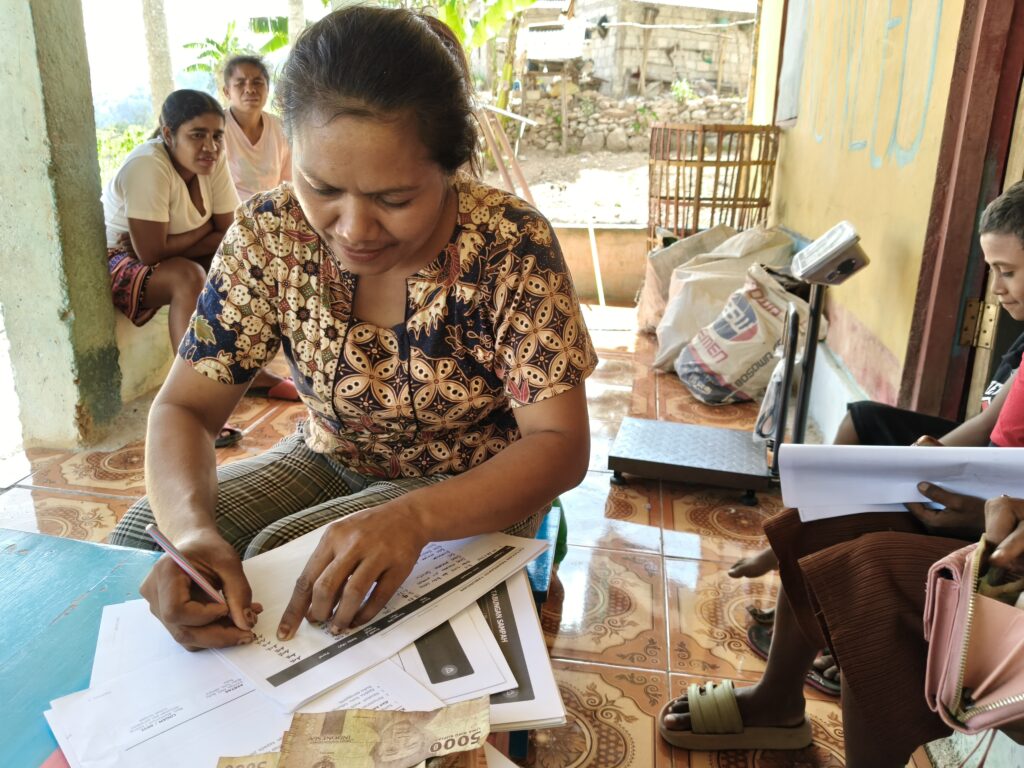
Timor Tengah Selatan Regency (November 17, 2026) — More than a dozen residents of Hamlet 3 (Dusun 3) in Nunleu Village, Timor Tengah Selatan Regency, launched a community-based inorganic waste management movement on Saturday (11/13). During the event, residents brought in their sorted household waste to be weighed at PAUD Sion (Early Childhood Education Center), which serves as a temporary collection hub before the waste is distributed to the Waste Bank (Bank Sampah).
In this inaugural weighing session—serving as the initial pilot phase—over 50 kilograms of plastic waste alongside other recyclable materials, such as scrap iron and aluminium, were successfully collected.
This initiative addresses pressing waste management challenges at the village level. According to the 2025 National Waste Data from the Ministry of Environment and Forestry (KLHK), Timor Tengah Selatan Regency ranks as the highest producer of recyclable waste in East Nusa Tenggara (NTT) Province, generating 36,194.86 tons per year. Due to limited waste collection infrastructure, much of this recyclable potential has historically ended up being burned openly, posing environmental pollution risks and threatening the health of pregnant women and young children.
Agus Adina Tampani, an educator at PAUD Sion Nunleu and Head of the Waste Collection Group, explained that the initiative not only reduces pollution caused by open burning practices, but also boosts the local community’s income.
“This (recyclable) waste collection is a step forward for our shared economy,” said Mama Adina.
Four-Pillar Synergy at the Village Level
Supported by Bank of America as part of climate action efforts, this waste collection initiative is driven by a four-pillar collaboration in Nunleu Village: Foundation for Mother and Child Health (FMCH) Indonesia as the initiator and field facilitator; Sion Church as the congregation mobilizer that also deploys church youth as the duty team during weighing sessions; the Village Government (Pemdes), which issues official advisories through hamlet heads and neighborhood leaders (RT/RW) urging residents not to burn plastics; and Betamor Waste Bank as the technical partner responsible for setting waste classification standards and pricing, recording transactions, and channeling materials to recycling off-takers.
Beyond Nunleu Village, three other villages in Timor Tengah Selatan Regency have also committed to implementing similar initiatives: Kokoi Village, Anin Village, and Nenoat Village.
Boosting Household Economy: From Homes to Community Savings
Before bringing their waste to PAUD Sion, each family sorts their materials at home—ensuring they are clean and dry—into three main categories: high-value plastics (bottles, drink cups, plastic household items), paper and cardboard, and metals (scrap iron and aluminum). Residual waste and hazardous and toxic materials (B3), such as disposable diapers and used batteries, are separated to prevent contamination.
Upon arrival at PAUD Sion, officers inspect the cleanliness of the materials and weigh them by category. The weighing results are recorded directly into each resident’s Waste Savings Book (Buku Tabungan Sampah). Through this scheme, residents can choose to receive the proceeds in cash immediately or save them until a larger sum accumulates.
Enthusiasm for the program was echoed by Antonia Yinihala, one of the participating residents. She expressed her delight in joining the collection drive and earning IDR 53.000 in her inaugural waste savings deposit.
“Because today I collected waste, and it serves as additional income for us,” said Mama Antonia.
The weighed waste is subsequently packed into gunny sacks and stored at the PAUD Sion transit warehouse. Once the accumulated volume reaches the minimum transport quota of 250 to 500 kilograms, the Waste Bank and YBSI will pick up the materials and distribute them to the recycling industry.
Through this initial step at PAUD Sion, Nunleu Village is not only striving to create a clean, plastic-smoke-free environment for children to grow and thrive, but is also building a circular economy ecosystem that delivers direct added value to family welfare.